
This month, I’m diving into a personal study on the life of Esther, one of the most inspiring heroines of the Bible. Her story, found in the Old Testament book that bears her name, is a powerful testament to courage, faith, and divine purpose. Because of Esther’s bravery, the Jewish people celebrate the holiday of Purim—a joyous reminder of how one woman’s boldness changed history.
What Purim means
Purim is a Persian word meaning “lots.” Unlike other Jewish holidays and festivals, which have Hebrew names, Purim stands out with its Persian origin. The name comes from the method used by Haman, the villain in Esther’s story, who cast lots (or pur) to determine the date for his sinister plan—to destroy and kill all the Jews in Persia, young and old, infants and women, in a single day.
At the time, King Ahasuerus ruled over the vast Persian Empire, stretching from East Africa to India, encompassing 127 provinces (Esther 1:1). However, through divine intervention and Esther’s bravery, Haman’s plot was overturned. Instead of the Jewish people being destroyed, Haman was executed, and the Jews were granted the right to defend themselves. What could have been a day of tragedy turned into a victorious celebration that continues to be remembered with joy and festivity.
How Purim is celebrated
Purim is celebrated annually from sundown to sundown, always falling one month and one day before Passover. In 2025, it took place on March 13–14, and in 2026, it will be observed on March 2–3.
Purim originates when Queen Esther declared a celebration should be observed as “days of feasting and gladness, days for sending gifts of food to one another and gifts to the poor… and that these days should be remembered and kept throughout every generation.” (Esther 9:22,28)
There are four key mitzvot (commandments) associated with Purim:
Reading the Megillah
On each day of Purim, the Book of Esther—known as the Megillah—is read aloud. Every time the name of Haman is mentioned, the crowd joins in with a loud response. Graggers, or spinning noisemakers, are handed out and shaken to drown out his name. There may even be some enthusiastic table pounding as part of the commotion!
Giving to Those in Need
It’s customary during Purim to give to those in need—whether through monetary gifts, prepared meals, or food packages. This tradition, known as matanot la’evyonim, ensures that everyone, regardless of their circumstances, can join in the joy and celebration of the holiday.
Giving to Friends
The tradition of giving food and drink to friends—mishloach manot—is a meaningful way to show unity among the Jewish people. It’s a reminder that, even in difficult times, they stand together as one community. The basic guideline is that each person should send at least two different food or drink items to at least one other person. Many go above and beyond, creating beautifully themed or extravagant gift baskets to share the joy of the holiday.

Feasting, Fun and Frivolity
Purim is preceded by a one-day fast, honoring Esther’s time of prayer and fasting as she sought God’s intervention for her people (Esther 4:15-16). Once the celebration begins, the mood shifts, and there is plenty of joy, good wine, and sweet treats.
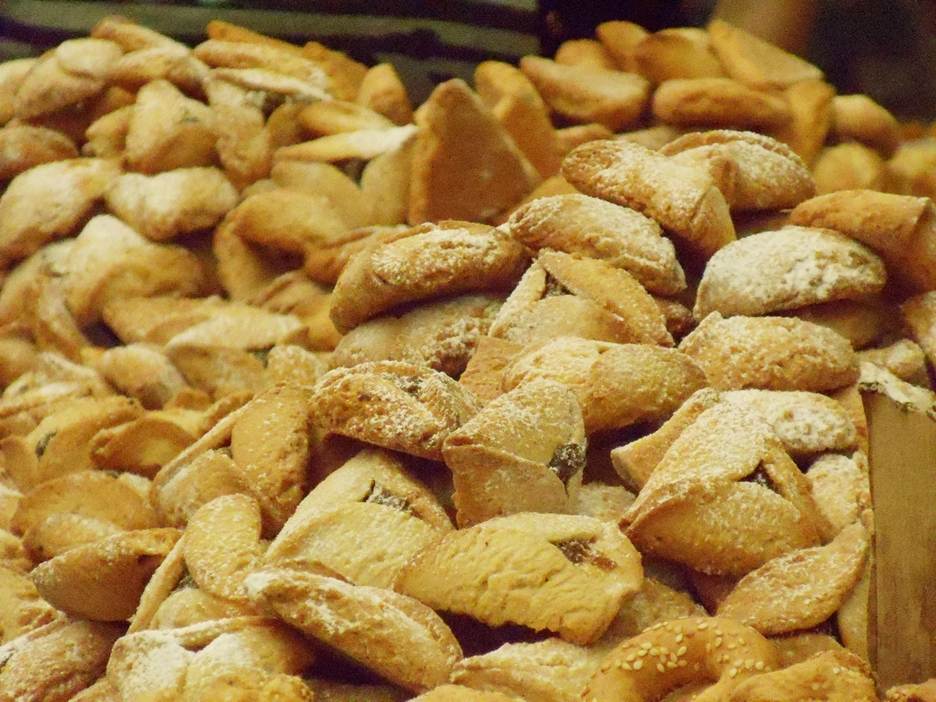
One traditional favorite is hamantaschen—a three-cornered pastry typically filled with poppy seeds, though modern versions come with all sorts of fillings. These treats often find their way into gift baskets.
On Purim, it’s customary to masquerade—people wear masks or dress in creative, unusual ways as a reflection of how God worked behind the scenes in Esther’s time, orchestrating events so the Jewish people would be saved. Many communities celebrate with large-scale carnivals, and synagogues often host a Purim shpiel—a playful, humorous performance that often pokes fun at community leaders and adds to the lighthearted spirit of the holiday.
As I continue my personal study of Esther’s life, I’m reminded of how her courage, faith, and divine purpose have had throughout history. Purim is not just a celebration; it’s a joyous reminder of how one woman’s boldness changed the course of history and preserved a people. And even though God’s name is never explicitly mentioned in the book of Esther, we can still see His hand at work in the hidden ways He moves in our lives.
What do you love most about the celebration of Purim? Let me know in the comments!
Resources: 1) Chabad.org 2) myjewishlearning.com 3) goodhousekeeping.com
Disclosure: Feature photo is of homemade hamantaschen. Photo courtesy of Brian Nelson on Unsplash








I’d love to hear what you think!