

When it comes to making changes in life, we might embrace them, swapping out something old for something better, fresher, and more useful for the season we’re in.
Some changes are tougher to face, like losing your job, getting a difficult health diagnosis, or stepping in to care for an aging parent. They’re not the changes we’d choose, but how we navigate that season can make all the difference.
Two women in the Bible who faced devastating loss responded in different ways, making choices that dramatically altered the course of their lives.
The book of Ruth opens with Naomi, who, along with her husband and two sons, left their hometown of Bethlehem because of a famine and moved to Moab. What was meant to be a short stay turned into ten years, during which the two sons married women from Moab.
During that time, Naomi lost her husband and both sons. She was grief-stricken, heartbroken, and bitter about how life had treated her. With no way to support herself as a widow, she decided to make the tough journey back home alone, hoping to find help among her own people.
One of her daughters-in-law, Ruth, refused to leave Naomi. She said, “Don’t urge me to leave you. Where you go, I will go. Your people will be my people, and your God will be my God” (Ruth 1:16). Beyond that, Ruth pledged to stay with Naomi until death: “Where you die, I will die, and there I will be buried” (Ruth 1:17). She vowed that only death would separate them.
Naomi may have been the only close family Ruth had left, and as a widow herself, she wanted to remain with someone she loved as they face this new season together.
Ruth couldn’t control how her life shifted after losing her husband, but she could decide how to face the next chapter while caring for her mother-in-law.
While Naomi was returning to a familiar life, Ruth came from a pagan land where the God of Israel wasn’t worshipped. As a non-Jew, she would be moving to a town where people might look down on her as a Gentile, even with her connection to Naomi. Being a Moabite also meant the chances of her remarrying were slim.
In Bethlehem, Ruth’s mission became supporting Naomi through her grief and caring for her, even if it meant staying in a foreign land where her race was looked down upon. Together they struggled with severe poverty, but Ruth faced it head-on, doing whatever was needed for them to get by. She spent long days gleaning in the fields during the barley and wheat harvests, enduring the hot sun and the risk of mistreatment as a young, Gentile woman.
Why would Ruth choose this drastic change – to live in a place where people would look down on her and where she may have had to look at life alone after her mother-in-law died?
When Ruth declared that Naomi’s God would be her own, she likely understood His care and faithfulness. This gave her the strength to face the days ahead, unaware of how her story would ultimately unfold.
We often resist change, not because the new is bad, but because the old feels familiar. Sometimes, though, God wants us to move from our comfort zone so He can bring about something even better.
Change can feel unsettling. Whether it’s entering a new season, facing an unexpected opportunity, or dealing with a closed door, our instinct is often to hold on to what’s familiar. But God doesn’t want us living in the past—He calls us to trust Him with the new things He’s bringing into our lives.
In the book of Isaiah, the prophet was sent to share God’s promises with a tired and exiled Israel. They yearned for the past—familiar places, former triumphs, and a sense of comfort. Yet God had a different message for them:
“Forget the former things; do not dwell on the past. See, I am doing a new thing! Now it springs up; do you not perceive it? I am making a way in the wilderness and streams in the wasteland.” — Isaiah 43:18–19 (NIV)
God wanted His people to stop dwelling on the past and start trusting in what lies ahead. Their circumstances might have seemed like a wilderness, but He was already creating a path through it—and He still is.
God was already working behind the scenes for Ruth and Naomi. In time, Ruth married Boaz and became part of the lineage of Jesus, the Messiah.
Maybe you’re facing a change you never wanted or grieving what life used to look like. The next steps feel uncertain.
Yet Ruth couldn’t see Boaz.
Naomi couldn’t see restoration.
Yet God was already working before any of them recognized it.
You may not see what God is doing, but you can trust that He is faithful and is already making a way for you.
Journaling Prompts
- What change in your life have you been resisting because it feels unfamiliar or uncertain? Bring that situation before God and ask Him to help you trust Him with your next step.
- Ruth chose faithfulness before she knew how her story would end. Where might God be asking you to take one faithful step without knowing the outcome?
- Looking back, can you identify a season when God was already working behind the scenes, even though you couldn’t see it at the time? How does remembering that encourage you today?
- Read Isaiah 43:18–19 again. What “new thing” might God be inviting you to notice instead of dwelling on what you’ve lost or left behind?

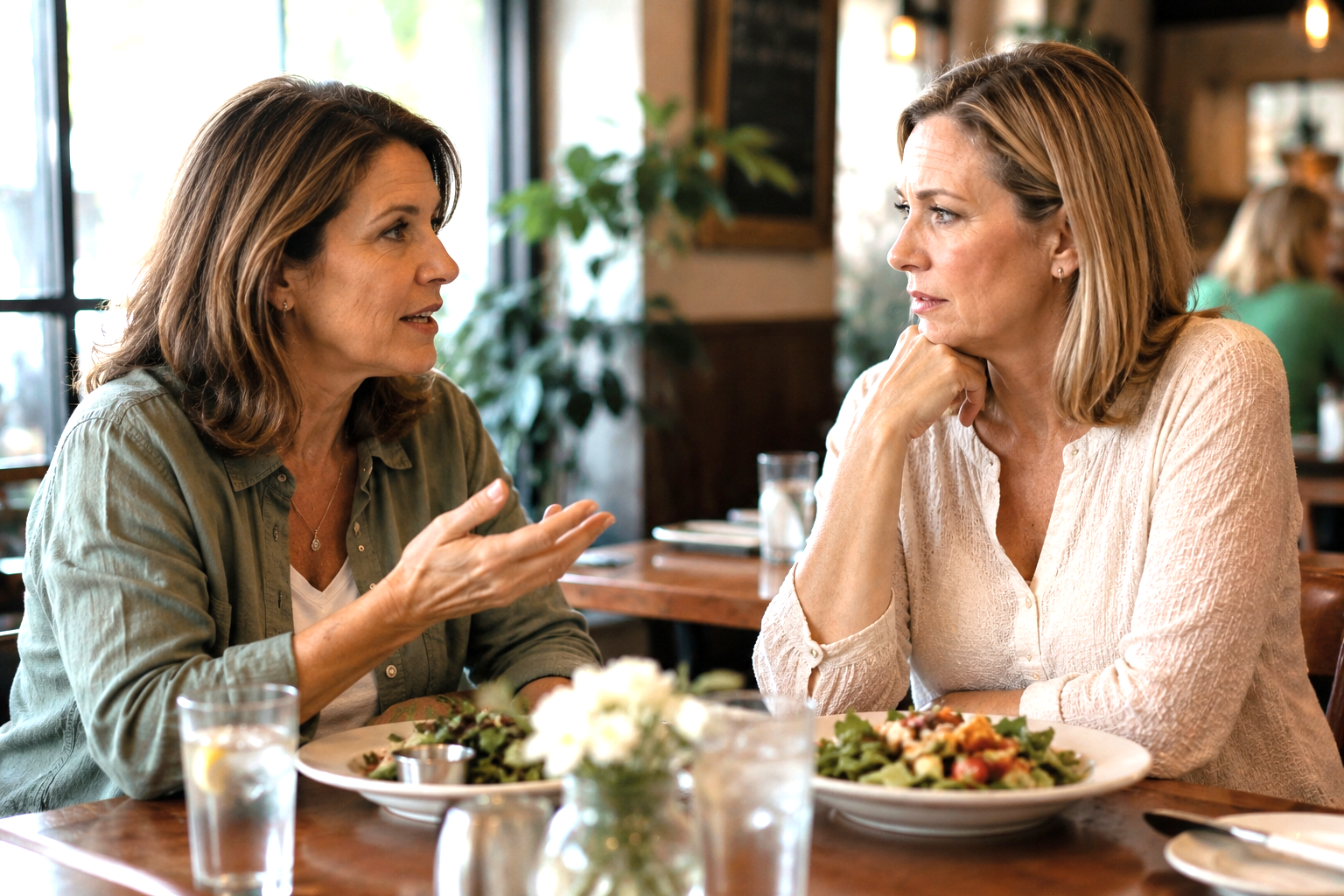
Disclosure: The featured image was created by AI to illustrate the subject of this post. It is not meant to represent any real location. AI can make mistakes.








I'd love to hear what you think!