
Now that our family is settled in Topeka, we’re excited to do some exploring and learn more about the city we’ll be calling home for a while.
We’re fortunate to be renting a home in one of Topeka’s most iconic and historic neighborhoods—Westboro. It seemed like the perfect place to begin discovering more about our adopted hometown.

One of the first things that piqued my curiosity about the neighborhood happened while walking my dog, Zoey. I noticed that at the corner of each street, its name is embedded in the sidewalk using lettered tiles similar to those in New Orleans. That little detail sent me straight to the library for answers.

The Topeka & Shawnee County Public Library has fantastic resources, including the Topeka Room, which is dedicated to local history and genealogy. With the help of an incredible librarian, I was able to sit down with information about Westboro’s origins.
Westboro Beginnings
Westboro was established in 1926 by the Westboro Homes Company, a partnership between Roy Linscott and Tinkham Veale of Kansas City. They envisioned Topeka as a progressive city, one that would support a modern residential district—with curved streets that followed the natural topography, plus eliminating alleys and other “objectionable” features of older city layouts. Their vision was that Topeka would one day have a neighborhood as fine as any in the country for a city its size.

The plan for Westboro included one mile of paved streets, sidewalks, seven parks, 150 planted trees, and large corner lots. The developers also promised community services like lawn care, trash pickup, and even special police protection “at a nominal cost.”
(Sounds like Westboro may have had one of the first HOAs!)
Both Linscott and Veale invested in their own project, with Linscott building the first home on Shadow Lane and Veale following with a home on Pembrooke Lane. Over time, Westboro filled with beautiful homes built in Italian Renaissance Revival, French Eclectic, and Colonial styles.
In 1936, the addition of the Westboro Mart brought even more convenience to the neighborhood. The Spanish style structure housed a drug store, a grocery with delivery service, a beauty parlor, a barber shop, and even a Turkish bath parlor— making Westboro a unique, first-class place to live. The main building expanded over time and is still being used today.
Westboro’s Street Tiles
The blue-and-white lettered tiles used to mark street corners were reminiscent of New Orleans, where their sidewalk tiles date back to the 1880s. In a slower, horse-drawn era, this kind of street labeling made sense, and while they’ve become rarer over time, they’re still prized today (and even reproduced by specialty tile companies).
While I couldn’t find exact details about the installation of the street tiles, it makes sense that they were part of the original neighborhood design, since sidewalks were included from the beginning. Maybe one of the developers had taken a trip to New Orleans and brought this charming idea home with them.
Westboro Today
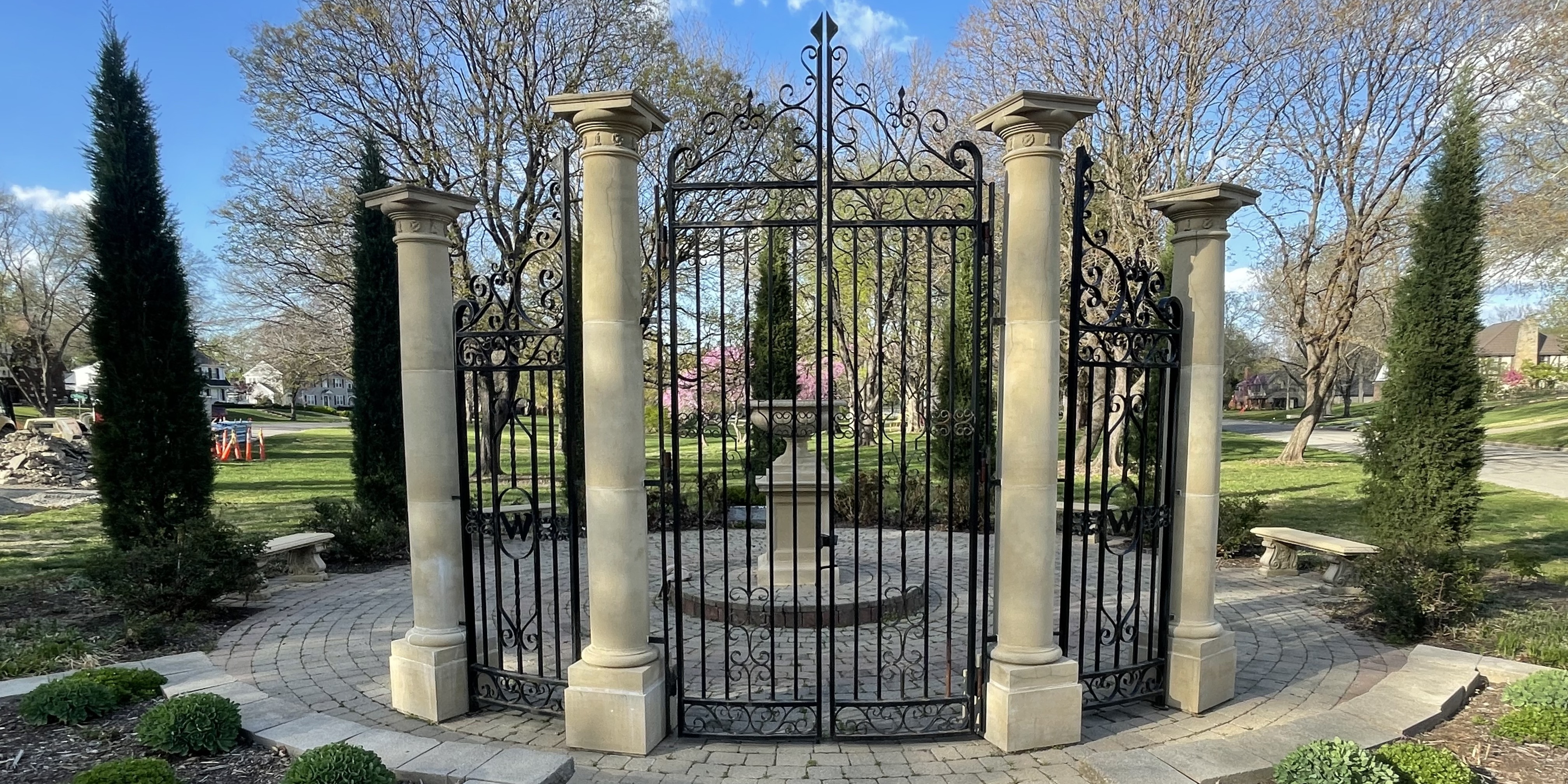
Many original features of Westboro still exist today—from the brick columns that mark the neighborhood’s entrances to the original gate structure at the main community park.

There’s also one charming detail that still happens in this neighborhood—a little holdover from another era. Mail is delivered the old-fashioned way, by walking postal carriers who drop letters right into the mail slots at each front door. It’s just one more thing that makes Westboro feel like a step back in time.
Exploring Westboro has been such a fun way to get to know our new hometown. (We have already discovered another hidden gem in Topeka about Abraham Lincoln’s connection to Kansas!) I can’t wait to see what other hidden stories Topeka has waiting around the corner! More to come!
Sources:
1) Westboro: A Neighborhood of Tradition, Westboro Homeowners Association, July 2013.
2) Westboro Homes Company sales brochure, date unknown, retrieved from the Topeka & Shawnee County Library archives.
3. Let the Tiles Lead the Way, the History of the New Orleans Street Tiles, WGNO TV, New Orleans
4. Westboro Homeowners Association website, retrieved April 10, 2025
Photos taken and property of Angie Vallejo










Leave a Reply to KandasCancel reply