
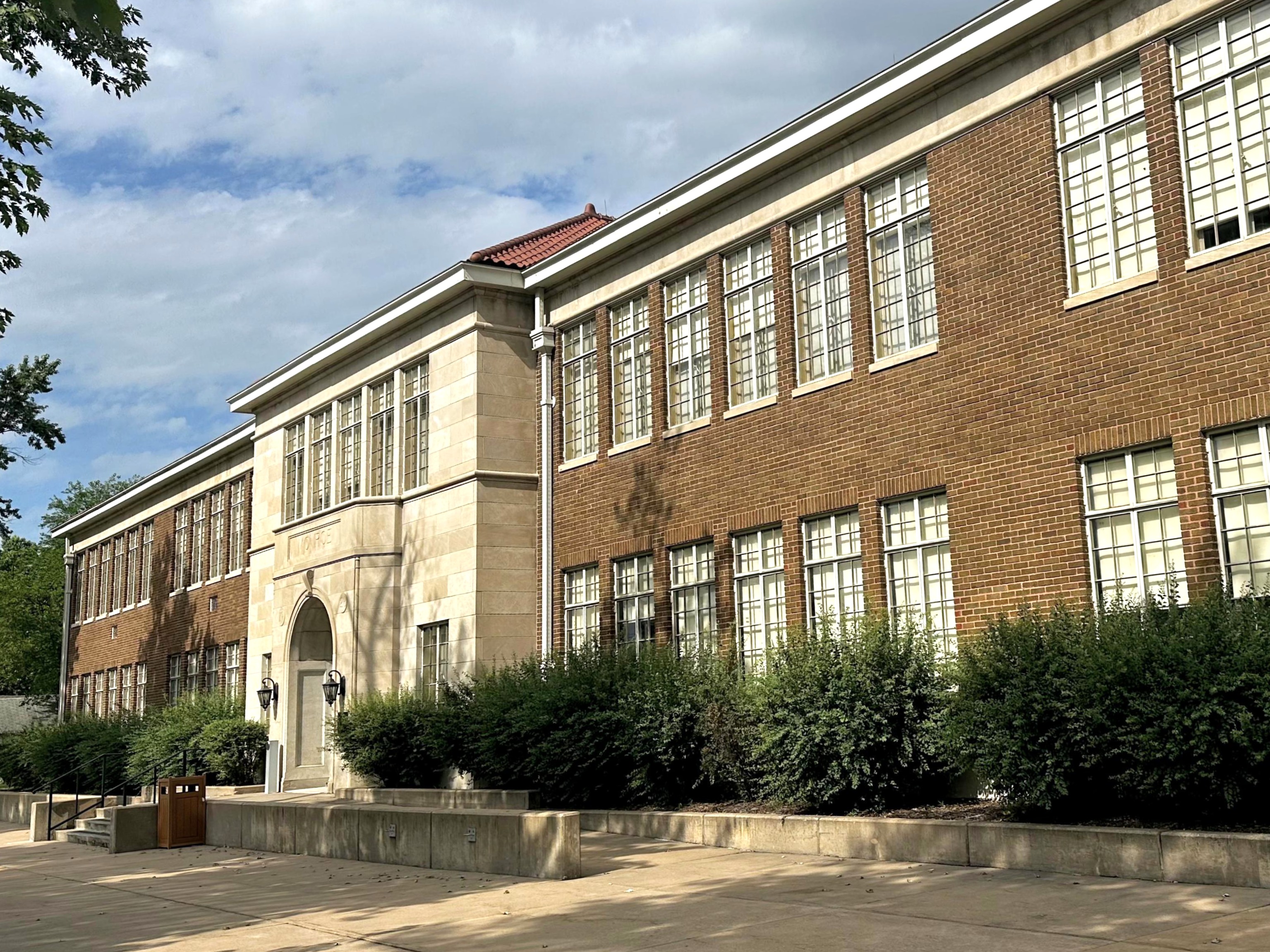
In a quiet neighborhood of Topeka on Monroe Street stands the former Monroe Elementary School, now home to the Brown v. Board of Education National Historical Park. This site has been welcoming visitors since May 17, 2004—a date chosen intentionally to mark the 50th anniversary of the landmark Supreme Court ruling that declared racial segregation in public schools unconstitutional.
The story here goes far beyond bricks and mortar. It represents a legal battle that forever reshaped education and civil rights in the United States. In 1954, the Supreme Court’s decision in Brown v. Board of Education declared that “separate educational facilities are inherently unequal,” effectively ending legalized segregation in schools.
A School with a Story
Monroe Elementary was one of four segregated elementary schools for Black children in Topeka. The current building, completed in 1927, replaced a small four-room schoolhouse that had served the neighborhood since the late 19th century. Today, the school has been lovingly restored to highlight its role in history.
Visitors can step into the kindergarten classroom, restored to its 1954 appearance, complete with tiny wooden table and chairs, chalkboards, and a piano. The refurbished auditorium, featuring its original wood floors, once served as the lunchroom and later became a hub for community events.

Walking Through History
The self-guided tour begins with exhibits that trace the roots of segregation back to 1619, the beginning of slavery in America. Panels and displays walk visitors through the Civil War, Reconstruction, and the rise of Jim Crow laws. From there, the museum connects the dots to early 20th-century legal challenges to segregation.

As you continue, the story broadens beyond Topeka. Exhibits highlight the struggle for integration in the years after the decision: the courage of the Little Rock Nine in 1957, who braved angry mobs to attend Central High School in Arkansas, and the bravery of six-year-old Ruby Bridges, escorted by federal marshals to her New Orleans school in 1960. The museum also features artifacts and displays from the Modern Civil Rights Movement of the 1950s and 60s, connecting education to the broader fight for equality.
The People Behind the Case
Behind the legal proceedings were ordinary citizens who took extraordinary steps. The Topeka branch of the NAACP, led by McKinley Burnett, worked tirelessly to organize families to participate in the case. Parents like Oliver Brown, who agreed to file suit on behalf of his daughter Linda, showed tremendous courage in standing up against the established system.
While Brown v. Board of Education may be the best-known case, it wasn’t the first. An exhibit details the five lawsuits—filed in Kansas, Delaware, South Carolina, Virginia, and Washington D.C.—that were consolidated into the case eventually decided by the Supreme Court. Through videos, photographs, and personal testimonies, you see how everyday families played a role in reshaping the nation.
Reflections Beyond the Walls
Before leaving, take a moment outside to notice the historical mural across the street. While not officially part of the National Park, this vibrant artwork depicts a timeline of the Civil Rights Movement. Its bold colors and powerful imagery serve as a reminder of the struggle for equality.

Plan Your Visit
Whether you are a history buff, a student, or simply someone who wants to better understand America’s journey toward equality, this site is worth a visit. The Brown v. Board of Education National Historical Park is open every day from 9 a.m. to 5 p.m., and admission is free. And if you are from Topeka and haven’t visited this significant National Park in your own community yet, it’s time add it to your bucket list!
SOURCES
- National Park Service
- Brown Foundation
- Wikipedia: Brown v. Board of Education National Historical Park








I’d love to hear what you think!