
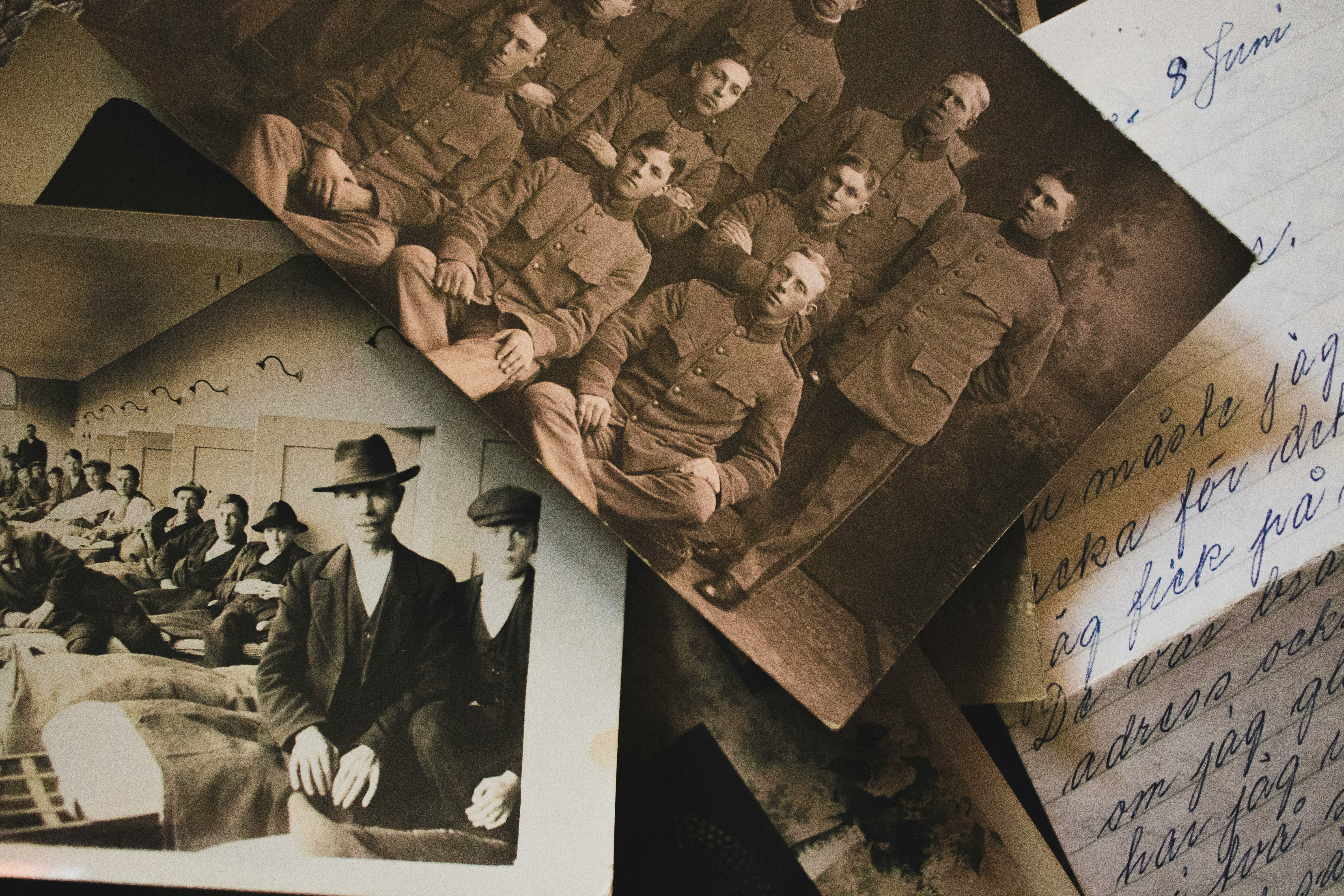
Have you ever thought of genealogy as a creative outlet? It might not involve traditional craft supplies, but digging into family history can really stir the imagination. Every name you find, every story you uncover—it’s all piecing together a giant, personal puzzle. You’re not just collecting facts; you’re bringing the past – your past — to life.
Genealogy lets you play the role of storyteller, memory keeper, and even detective all at once. And the best part? It’s a meaningful (and surprisingly fun) way to connect with your roots, honor the generations before you, and maybe even spark some new creative projects along the way.
If you’ve been wanting to put together your family tree but have no clue where to start, here is a plan to get you started:
Start with What You Know
Grab a notebook or open a Word document and write down everything you already know—your parents’ full names, birthdays, marriage dates, and places they were born and where they lived. Then go backward: what do you remember about your grandparents?
Talk to Your Family
Reach out to older relatives—parents, grandparents, aunts, uncles—and ask them about names, dates, and stories. Sometimes a five-minute conversation will turn up a memory or detail you’d never find online. (Tip: record the conversation or take notes!)
Collect and Copy Old Documents & Photos
Ask your family members if they have any old documents—birth or marriage certificates, obituaries, family photos or family Bibles—that might be tucked away. Scan or take photos of everything you find, and make notes of any names, dates, or places written on the backs. These small details can unlock big discoveries.
- If you have names and approximate dates, try looking up Vital Records like birth, marriage, and death certificates. Each U.S. state has its own office for these records—just search online for “Vital Records + [State Name]” (like “Vital Records Kansas”). You can also use this helpful link: CDC’s Vital Records by State to find the right office.
- If you know locations, dig deeper with city directories or old newspapers using Newspapers.com or library’s digital archives.
- Census records (starting in 1790 in the U.S.) are a goldmine! They show who lived in a household, their ages, and relationships—helping you piece together family lines across generations. (Tip: For older records— usually before 1900—check county courthouses or state archives. Many of these documents have been digitized and may be easier to access than you’d think!)
- Don’t forget online tools like Ancestry.com, FamilySearch.org, FindMyPast.com, NGSGenealogy.org, and FindMyPast.co.uk. Some are free, and others offer trial periods or access through your local library.

Choose a Way to Organize Your Tree
You can go old-school with paper charts or try free sites like FamilySearch.org or Ancestry.com (some features are free). Even a simple Excel sheet works to keep track of names and dates.
Look for Patterns and Stories
This is where the creative part really kicks in. Are there names that repeat? Places that several generations lived? Occupations that show up over and over? These little details can lead to bigger discoveries—and beautiful stories to tell.
Genealogy might seem a little intimidating at first, but it’s really just about being curious and following the little clues your family left behind. Even starting with a few names or photos can lead to some meaningful discoveries to your family’s story. You don’t have to know everything or have the perfect system—just take it one step at a time.
Coming on Tuesday in Part 2,
We’ll talk about simple ways to organize what you find (without getting overwhelmed) and fun, creative ideas for how to turn your research into something personal and beautiful. There will also be a Free printable to download to help you in your project! Stay tuned—you’re going to love this part!
Want to get a head start before Part 2? Try gathering a few photos or jotting down a favorite family story—you’ll be using those in some fun ways next time!
Disclosure: Photo courtesy of June Hansen on Unsplash







I'd love to hear what you think!