
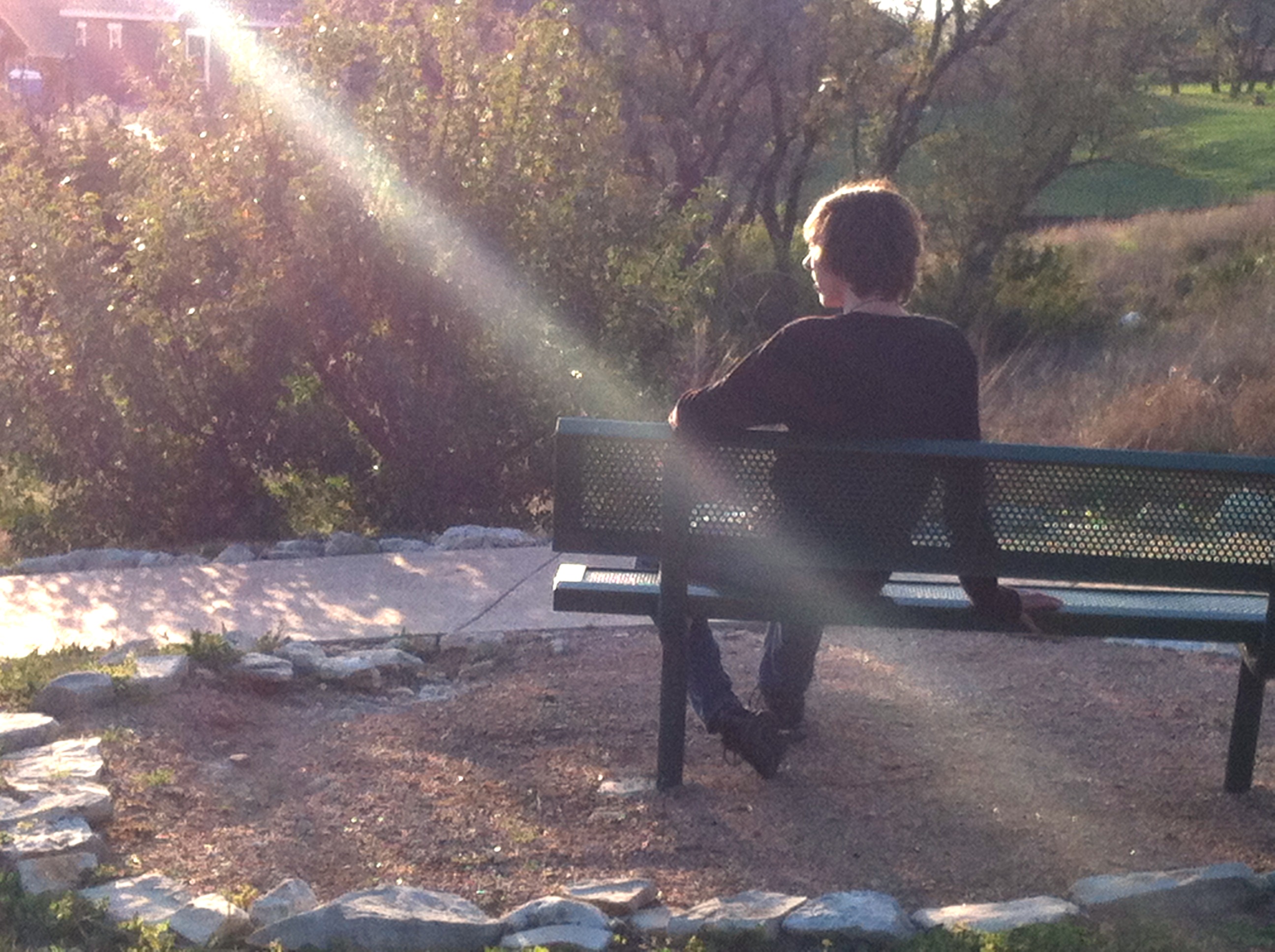
I just wanted one good picture of my two sons together.
It was a lovely Texas spring evening, the wildflowers in full bloom. As a family, we headed to the local park for my 10‑year‑old to run and climb the playscape. I had my camera ready to capture my youngest enjoying every second of it. Then I asked my oldest if he’d pose with his brother.
But my temperamental teenager shot me a look that said, “Seriously?”
I tried coaxing him, but he drifted away and sat down on a nearby bench, his back turned to us.
I felt frustrated. All I wanted was one normal photo. I told him I’d take his picture right there if he wouldn’t come over—but he didn’t move.
So, I took the photo anyway.
Not because it was a good shot. Mostly because I was stubborn.
When we got home, I was disappointed that my teenager wouldn’t give me even one photo to remember the day. A picture of him with his back to me wasn’t one I planned to keep. It felt like the kind of moment that just… wasn’t worth remembering.
Years later, I came across those photos again.
I was searching through my photos, scrolling past not just the good ones, but also the blurry, awkward, badly timed shots—the ones you’re tempted to delete because they don’t seem to matter.
And then I stopped.
There he was. Not smiling. Not performing for the camera. Just being exactly who he was that day—moody, independent, and refusing to cooperate with his mother’s plans.
Now? I see something entirely different.
I hadn’t captured a perfect day.
I had captured a real one.
Why Imperfect Family Photos Matter
For years I thought good photos were the ones where everyone looked happy at the same time. Smiling faces, nice lighting, everyone cooperating— proof that we were doing family life well.
But those aren’t the photos I linger over now.
It’s the bowling alley photos where my son looked small compared to the oversized ball on the long wooden lane. At the time I thought he was too far away in the frame. Now I see the story — how little he was, and how big the world felt to him.
It’s even the unexpected details. I once took a random photo of my teen’s shoes because I couldn’t believe he was already wearing a size 14. That picture wouldn’t win any photography contest, but it’s a memory I would never have written down anywhere else.
I once thought imperfect photos were failed photos.
Now I think they are often the honest ones.
Perfect pictures show how we hoped the day looked.
Imperfect pictures show how it actually felt.
Today we see beautiful images constantly — coordinated outfits, clean kitchens, everyone smiling at the camera at the same time. They’re lovely, but they aren’t how most of our days actually unfolded.
Our photos were taken in school classrooms, cluttered living rooms, and parks where someone didn’t want to participate. We really weren’t documenting a performance. We were recording life as it was happening. And years later, those ordinary pictures tell a fuller story than any carefully arranged photos ever could.
Those were real seasons too. Many of the things we now miss didn’t feel meaningful while we were living them.
But those photos quietly recorded what we couldn’t see at the time: we were there.
Life was happening in ordinary ways we didn’t recognize as important at the time.
I used to think creativity meant making something beautiful out of a moment.
Now I think sometimes creativity is simply deciding the moment was worth keeping—even when it didn’t look significant at the time.
We don’t always need to fix the photo.
Sometimes we just need to keep it.
Ordinary Moments Become Precious Later
I went back and looked again at the pictures from that day in the park.
There’s my younger son climbing and running.
And there’s my oldest, sitting on the bench, turned away from the camera.
Instead of a photo gone wrong, I now see it meant I captured exactly who he was — a child growing into himself, separate from me, learning his independence one small refusal at a time.
It turns out I didn’t miss the memory because the picture wasn’t perfect.
I almost missed it because I expected perfection.
We spend years trying to capture ideal moments.
But the ones that stay with us are usually the ordinary ones — maybe a little blurry, poorly timed—but completely true.
And I’m grateful that is a photo I kept.







I’d love to hear what you think!